THE CALLING AND ORIGIN STORY
A calling is not always loud. Sometimes it is a persistent conviction shaped by experience, suffering, and compassion. The founder of Hope and Faith Home grew up in a family intimately acquainted with disability. A brother lived with autism, three cousins carried intellectual challenges, a grandfather was visually impaired, and an uncle lived with a physical disability. These family realities were not abstract; they were daily faces, daily needs, and daily lessons in dignity and dependence.
From early on the founder resolved that life would not stand still as suffering passed unnoticed. During years of employment, quiet sacrifices were made and savings accumulated. The savings were not an end in themselves but a seed for a future work. When the time came, those savings funded diapers, foodstuff, utility bills, and the salaries of the first caregivers. The early Home was simple and fragile. Caregivers worked long hours for modest pay, sometimes going unpaid for months. There were nights of worry about rent, bills, and the children’s basic needs. There were seasons when staff left, discouraged by delayed wages. Still the calling endured.
The decision to begin a Home grew from compassion, personal testimony, and a conviction that God had placed a specific mission before one ordinary life. The first rescued children came from street-connected and poverty-stricken families. Some lay abandoned in compounds, some were chained in rooms, and others had been left on the streets where they became vulnerable to abuse and disease. The founder could not walk past these realities. The first rescues were literal retrievals: removing children from harm, establishing immediate care, and finding temporary shelter in rented rooms.
As word spread the community responded. Walk-in visitors, neighbors, and passersby offered food, labor, and encouragement. The local community helped to build the first structures. Those early, hands-on contributions became the scaffolding of a larger dream. The Ministry’s growth was slow and precarious until a pivotal partnership with an institutional donor provided permanent stability. Standard Chartered Bank purchased land and sponsored construction at Juja Farm, marking a turning point that converted fragile survival into sustained service.
The years that followed were still marked by challenges. Relocation from Kasarani Mwiki to Kahawa Wendani exposed the Home to eviction notices and rent arrears. There were public moments of desperation, including a season when a major national newspaper featured the children and stirred public attention. That exposure brought both scrutiny and help. In time other supporters stepped forward: community groups that funded a perimeter wall, foundations that renovated therapy spaces, and individual donors who covered urgent needs. Each assistance translated desperation into possibility.
Why Hope and Faith Was Started
Hope and Faith was started because a few truths could not be ignored. First, disability in many communities is treated with fear, shame, and neglect. Children and adults with disabilities are often hidden from view, deprived of education, denied medical care, and barred from social life. Second, families that are impoverished or uninformed sometimes resort to cruel but practical coping mechanisms: confinement, chaining, or abandonment. Third, government and community systems frequently fail to provide accessible rehabilitation or social integration. Those three realities combined to create unnecessary suffering.
Hope and Faith came into being to interrupt that suffering. The Home was founded to rescue individuals from immediate danger, to rehabilitate their bodies and minds, to reintegrate them into families and communities where possible, to resocialize them into everyday life, and to prevent future abandonment through education and advocacy. These five pillars—rescue, rehabilitation, reintegration, resocialization, prevention—constitute the Home’s functional and moral architecture.
The decision to act was also theological. The founder’s Christian faith provided moral clarity: the vulnerable deserve protection, the broken have inherent worth, and the compassionate are called to serve. The biblical narrative of redemption, which turns despair into hope, guided the founder’s conviction that lives could be restored. Faith was both engine and anchor. It inspired personal sacrifice during seasons of scarcity and it shaped the Home’s long-term vision for restoration and dignity.
What We Do
Hope and Faith Home is structured around five core functions embodied in the 4R&P framework: rescue, rehabilitation, reintegration, resocialization, and prevention. Each function includes practical programs, daily routines, and strategic outreach that together create a continuum of care.
Rescue
- We identify children and adults living in unsafe or neglectful environments: chained in compounds, living on the streets, or abandoned in unsafe households.
- Operators work with community informants, local leaders, and social welfare agencies to secure immediate removal and protection.
- Emergency intake provides immediate medical attention, hygiene care, food, and safe accommodation.
Rehabilitation
- Medical care and physiotherapy address physical impairments, especially polio-related disabilities, cerebral palsy, and mobility challenges.
- Rehabilitation includes regular physiotherapy sessions, mobility training, occupational therapy interventions, and procurement of assistive devices such as wheelchairs, crutches, and orthotics.
- Nutrition and hygiene form a core part of physical rehabilitation; the Home maintains routines that prioritize balanced meals and sanitary living conditions.
Reintegration
- Wherever possible we pursue family tracing and reconciliation. The aim is safe, sustainable reunification with informed, equipped families.
- Social worker-led assessments evaluate home environments, caregiver readiness, and the long-term welfare prospects of each child or adult.
- When reunification is unsafe or impossible, the Home develops alternative long-term arrangements including foster care placements, vocational pathways, or lifetime residential care depending on individual needs and capacities.
Resocialization
- The Home fosters social skills, communal habits, and participation in group activities to help children and adults move from isolation to social belonging.
- Activities include structured play, music and movement sessions, group therapy, basic literacy and numeracy where feasible, and life skills training adapted to functional ability.
- Therapeutic and recreational activities reinforce emotional stability, social engagement, and improved self-image.
Prevention
- Prevention addresses root causes. The Home engages in community education about disability, stigma, and rights.
- Outreach programs provide counseling to families at risk, training for caregivers, and awareness campaigns targeted at local leaders and institutions.
- By strengthening community supports and providing referral pathways the Home reduces the likelihood that children will be abandoned or chained in the future.
Each of these functions is delivered in harmony with child protection standards, local laws, and best practices for disability care. The Home’s social worker, caregivers, therapists, and supporting volunteers collaborate to design individual care plans that are continuously assessed and adjusted.
Daily Life at the Home
Daily life is designed to be predictable, nurturing, and rehabilitative. Children and adults follow schedules that emphasize care, therapy, hygiene, and meaningful activity. Days begin with communal routines: breakfast shared in community spaces, morning hygiene and dressing, and therapy blocks arranged by need. Physiotherapy takes place in the therapy room; sensory activities and educational sessions follow; afternoons include recreation, group activities, and spiritual reflection.
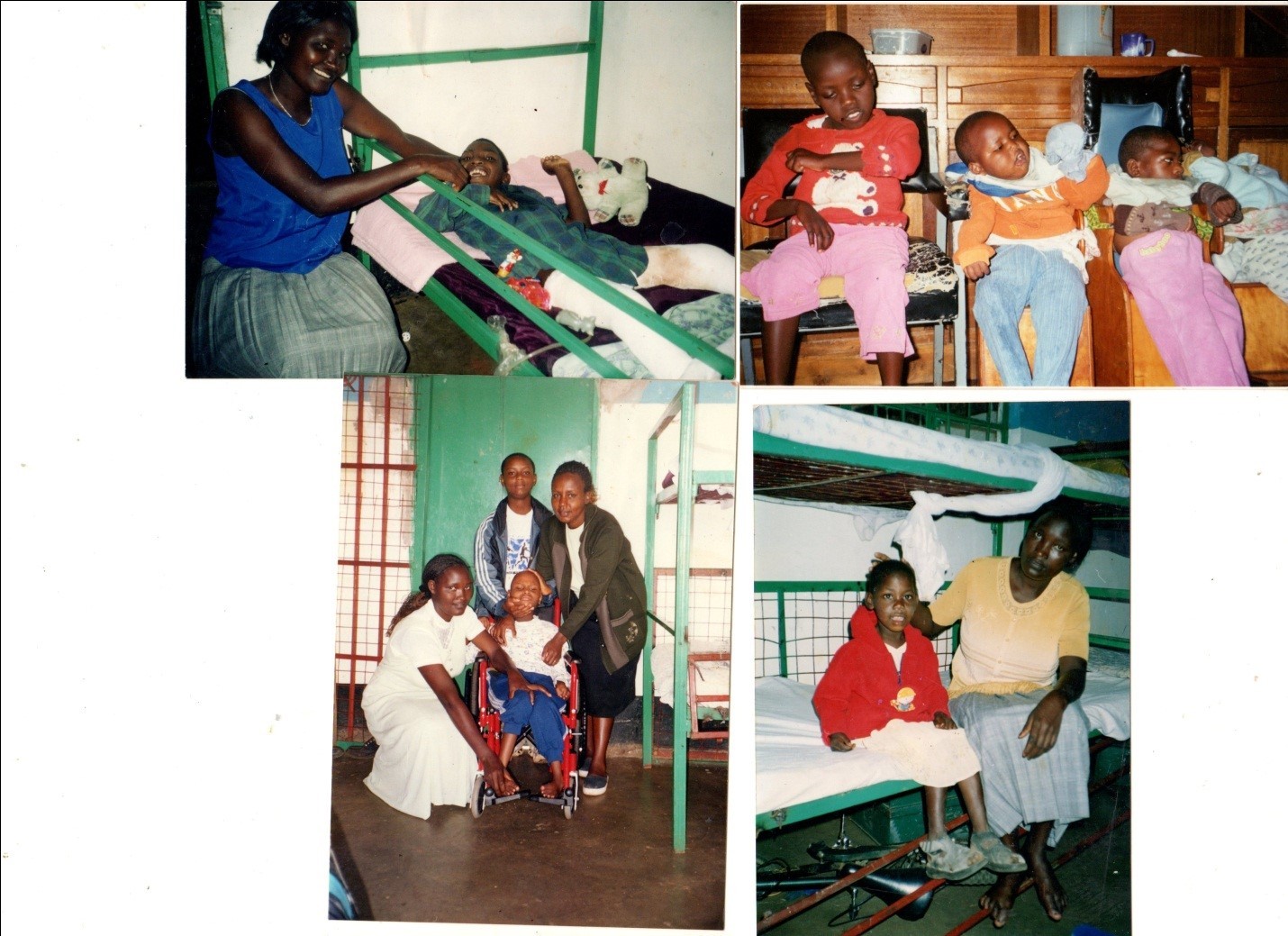
Meals are balanced and designed to meet dietary needs. Hygiene routines are carefully maintained. Sleep is organized in safe, monitored dormitories. Caregivers provide constant personal support from feeding and bathing to assisting with mobility. The Home has cultivated a family-like atmosphere where children experience stability, affection, and consistent adult presence.
The therapy room is a central space for physical and occupational rehabilitation. It houses basic equipment for mobility training, standing frames, exercise mats, and sensory toys for developmental stimulation. The Children Autism Foundation renovated and equipped this space, improving therapy outcomes and enhancing the dignity of daily care.
The perimeter wall and gate have been instrumental in securing a safe living environment. Prior to its construction the Home faced numerous security risks. The secure boundary now protects the children, reduces incidents of harm, and provides a peaceful environment where therapy and learning can take place uninterrupted.
Governance, Registration, and Standards
Hope and Faith Home is a registered charitable institution under the Children Act of Kenya and operates in alignment with the Care Reform Strategy 2022. Registration demonstrates a formal commitment to national child welfare standards, legal compliance, and accountability. Governance structures include operational oversight by the founder and internal management responsible for staff supervision, program delivery, and financial stewardship.
The Home maintains records of individual care plans, medical histories, and program activities. Transparency and accountability guide donor relations, program reporting, and partnerships. Financial stewardship includes budgeting for daily operations, capital projects, therapy needs, and staff remuneration. The Home is committed to clear reporting and welcomes donor visits and program reviews in compliance with child protection and operational safety protocols.
Donor Partnerships and Community Support
From its earliest days Hope and Faith has relied on a mosaic of donors and partners. Support has come from individual donors, local community groups, corporate sponsors, and charitable foundations. Each contribution—large or small—has translated into concrete care: food, diapers, medical treatment, physiotherapy materials, clothing, and staff salaries.
Major supporters and strategic partners have included:
- Standard Chartered Bank, which purchased land and sponsored the construction of the permanent Home at Juja Farm.
- Local community groups such as Sixty United Group from Gikomba and Thika Innovators guided by Kimani Group, which funded the perimeter wall and other infrastructural improvements.
- Children Autism Foundation, which renovated and equipped the therapy room, supported perimeter security projects, and donated essential equipment including a washing machine. They have also committed resources toward a future solar power system to mitigate frequent grid outages.
Donor engagement is not transactional. The Home invites meaningful partnerships that blend financial support with technical assistance, capacity-building, volunteer engagement, and shared advocacy. Donors receive periodic reports, photographic updates, and impact narratives. The Home values long-term relationships and seeks transparent, accountable collaborations with those who share its vision.
Stories of Transformation
Transformation at Hope and Faith is measured in movement: from chained to mobile, from silent isolation to social participation, from hunger to nourishment, from despair to hope. Individual stories illustrate the Home’s impact.
A boy rescued from life on the street with severe polio-related deformity now receives regular physiotherapy and has regained improved posture and upper-body strength. Rehabilitation has reduced his pain and increased his ability to sit and participate in group activities.
A young woman once confined to a single room as a child now attends social sessions, participates in group crafts, and enjoys music that stimulates cognitive and emotional response. Her caregivers report improved mood, increased eye contact, and greater willingness to engage.
Families that once feared the stigma of disability have, in some cases, been reached through counseling and support. Where reunification is possible and safe, carefully planned home visits and caregiver training have restored family ties and offered sustainable pathways for reintegration.
These stories are representative of countless smaller moments: a child laughing in play, a caregiver teaching a new skill, a physiotherapy milestone reached, or a family joining in a community celebration. Each moment is a sign that rescue combined with holistic care can restore personhood.
Theological Foundations and Biblical Narrative
Hope and Faith’s work is rooted in biblical conviction. The Christian scriptures offer consistent themes that shape the Home’s identity and practice: God’s concern for the vulnerable, the call to justice, compassion for the marginalized, and the dignity of every human life. The Home’s biblical framework unfolds from creation to redemption and into practical ministry.
Creation and Dignity
- Scripture affirms that every human being is created in the image of God and therefore bears intrinsic worth. This conviction undergirds the Home’s refusal to treat children with disability as disposable or shameful. Care is an act of honoring God’s image in the vulnerable.
Divine Compassion
- The biblical narrative repeatedly calls God’s people to compassion and hospitality: feeding the hungry, visiting the imprisoned and the sick, and defending the weak. These mandates inform the Home’s rescue and care activities. The founder’s service is understood as obedience to a divine summons to protect those who cannot protect themselves.
Redemption and Restoration
- Central to Christian faith is the idea of redemption—turning brokenness into wholeness. The Home’s rehabilitation work echoes spiritual restoration. Physical healing, emotional renewal, and social reintegration mirror the larger scriptural theme of restored community.
Perseverance and Hope
- The founder’s testimony often references the biblical promise that God completes what He begins. During seasons of financial stress, eviction threats, and personal exhaustion, faith provided resilience. Scripture’s assurance that suffering is not final empowered continued service despite hardship.
Justice and Advocacy
- The prophetic tradition demands that the oppressed be given voice. Advocacy for children with disability—combating stigma, promoting access to services, and securing their rights—reflects scriptural calls for justice and equitable treatment.
Prayer and Private Devotion
- Hope and Faith is sustained by prayer, worship, and spiritual rhythms that reinforce purpose. Spiritual practices create a foundation of hope that sustains staff and children alike. Faith is not an add-on but an integral component of the Home’s daily life and long-term vision.
The Home’s biblical identity is practical and compassionate rather than merely doctrinal. It is expressed not only in words but in action: feeding, healing, teaching, restoring, and defending those who were once hidden.
Accountability to Children and Community
Children in our care are human beings with rights. The Home upholds principles of child protection, confidentiality, and participatory care. Individualized care plans protect the child’s health, safety, and development. Case conferences, regular medical reviews, and social worker assessments ensure that interventions are appropriate and effective.
Community accountability includes clear communication with local authorities, collaboration with social services, and engagement with neighborhood leaders. The Home fosters partnerships with governmental and non-governmental agencies to create sustainable referral networks and to ensure compliance with national child welfare regulations.
Donors are assured that their gifts are used in service of measurable outcomes. Financial records are maintained, programmatic reports produced, and donor updates provided to sustain trust and to demonstrate impact.
Future Aspirations and Strategic Priorities
Hope and Faith’s vision is long-term. The Home intends to expand quality services while strengthening systems that prevent future abandonment and neglect. Strategic priorities include:
- Solar Power System: To ensure uninterrupted power for therapy, lighting, and essential equipment the Home seeks funding for a reliable solar installation. Frequent grid outages have disrupted therapy and increased costs; solar power will enable consistent, safe care.
- Therapy Program Expansion: Continued investment in rehabilitation equipment, therapy training for staff, and specialized interventions for children with complex needs.
- Staff Development and Retention: Competitive remuneration and professional development will retain skilled caregivers and build institutional capacity.
- Community Outreach and Prevention: Strengthened programs to educate families and communities about disability, reduce stigma, and create referral pathways that prevent neglect.
- Infrastructure Improvements: Adaptive bathrooms, accessible pathways, and expanded living spaces to accommodate individual needs.
- Income-Generating Initiatives: Social enterprises that can provide sustainable income for the home while offering vocational training and meaningful activity for older beneficiaries like starting a school.
- Strengthened Monitoring and Evaluation: Systems that demonstrate outcomes, track progress, and inform continuous improvement.
These priorities are designed to create a sustainable, accountable, and scalable model of care for children and adults with disability.
How Donors Can Partner
Donors and sponsors are invited to partner in several meaningful ways:
- Child Sponsorship: Ongoing monthly support that ensures stable care for an individual child. Sponsors receive updates and occasional visits in line with child protection policies.
- Program Sponsorship: Fund therapy sessions, rehabilitation equipment, or educational programming tailored to groups of children.
- Capital Giving: Infrastructure projects such as the solar system, water storage tower for 3tanks each 10000ltrs, van to take children to school /hospitals, and adaptive bathroom facilities.
- Operational Support: Contributions toward utilities, staff salaries, food, and medical needs.
- In-Kind Donations: Diapers, clothing, bedding, mobility aids, and educational materials.
- Skilled Volunteering: Physiotherapists, special needs educators, counselors, and vocational trainers who can contribute expertise.
Donor contributions are matched with transparent reporting and tailored recognition. The Home welcomes long-term partnerships that combine financial support with technical guidance and capacity building.
A Call to Sustain Hope: Core Values and Donor Appeal
Hope and Faith Home for Special Children is more than a shelter—it is a living testimony of God’s compassion, a sanctuary of dignity, and a place where brokenness is met with healing. Our mission is rooted in the belief that every human life, especially those most vulnerable, is sacred and worthy of love, care, and restoration.
As we continue to rescue, rehabilitate, reintegrate, resocialize, and prevent further harm to children and adults with disabilities, we invite you our potential donors, sponsors, and partners to walk with us in sustaining this sacred work.
Below, we share the biblical and practical foundation of our core values, not only to inform but to inspire your heart to join us in building a future where every child with special needs is seen, valued, and given the opportunity to thrive.
Why Our Core Values Matter
Core values are not mere statements—they are the heartbeat of our ministry. They guide our decisions when resources are limited, shape our priorities when needs are overwhelming, and define how we steward every gift entrusted to us.
At Hope and Faith Home, our values ensure that rescue leads to rehabilitation, that care restores dignity, and that faith becomes action. They are biblically grounded and practically expressed, holding us accountable to the One who calls us to “act justly, love mercy, and walk humbly with our God” (Micah 6:8).
Compassion: Practical Tenderness Toward the Vulnerable
Compassion is our first response to suffering. It fuels every rescue mission, every therapy session, and every moment of care. We do not offer pity—we offer restorative love.
We listen before we act. We meet urgent needs with gentleness. We remain steadfast even when progress is slow.
Biblical grounding: The Good Samaritan (Luke 10:25–37) crossed cultural boundaries to offer mercy. We follow that example, serving those who cannot help themselves.
Faith in God: The Spiritual Root of Service
Our work is a daily act of faith. We depend on God’s provision, guidance, and grace. Faith sustains us when resources run low and when challenges seem insurmountable.
We pray, we worship, and we serve believing that God is present in every act of care.
Biblical grounding: “He who began a good work in you will carry it on to completion” (Philippians 1:6). This promise anchors our perseverance.
Responsiveness: Timely, Contextual, and Person-Centered Action
We respond quickly and thoughtfully. Our care is never generic—it is tailored to each child’s evolving needs.
From emergency rescues to long-term rehabilitation, we adapt our plans to ensure continuity and dignity.
Biblical grounding: Jesus responded immediately to those in need—he healed, taught, and moved with compassion.
Respectfulness: Honoring Personhood and Choice
Every person carries the image of God. We honor that by respecting their choices, their voice, and their journey.
We engage families with humility, recognizing cultural contexts while advocating for the rights of the vulnerable.
Biblical grounding: “Love your neighbor as yourself” (Mark 12:31) calls us to uphold dignity in every interaction.
Individualized Support: Tailoring Care to Unique Lives
No two children are the same. We design care plans that reflect each person’s strengths, challenges, and aspirations.
Therapy, education, and social support are co-created and continuously adjusted.
Biblical grounding: God’s creation celebrates diversity. We honor that by offering personalized care.
Diversity and Non-Discrimination: Inclusion as Practice
We welcome all—regardless of race, ethnicity, or religion. Inclusion is not optional; it is essential.
We remove barriers, offer culturally sensitive care, and ensure equal access to services.
Biblical grounding: “Religion that God our Father accepts… is to look after orphans and widows… and keep oneself from being polluted by the world” (James 1:27).
Integrity and Accountability: Stewardship of Trust
We steward every gift with honesty and transparency. Donors can expect accurate reporting, ethical fundraising, and responsible financial management.
We believe that faithfulness includes how we handle resources.
Biblical grounding: The parable of the talents (Matthew 25:14–30) teaches us that accountability is a sacred duty.
Partnerships: Collaborative Strength for Greater Impact
We cannot do this alone. We partner with churches, NGOs, government agencies, and corporate sponsors to expand our reach and deepen our impact.
Together, we build a network of care that multiplies hope.
Biblical grounding: “Now you are the body of Christ, and each one of you is a part of it” (1 Corinthians 12:27).
Advocacy: Giving Voice to the Voiceless
We educate the public, challenge stigma, and influence policy. Advocacy is not just speaking—it is standing.
We speak for those who cannot, and we fight for systems that protect and include.
Biblical grounding: The prophets called for justice. We follow their lead by defending the rights of the oppressed.
Financial Sustainability: Enabling Long-Term Care
Sustainable care requires strategic planning and diversified funding. We seek donors who understand that long-term impact needs long-term commitment.
Your support ensures uninterrupted therapy, food security, staff salaries, and program continuity.
Biblical grounding: “The plans of the diligent lead to profit” (Proverbs 21:5). Wise stewardship secures the future.
Professionalism: Excellence in Service Delivery
We pursue excellence through trained staff, evidence-based practices, and continuous improvement.
Professionalism honors both our beneficiaries and our calling.
Biblical grounding: “Whatever you do, work at it with all your heart, as working for the Lord” (Colossians 3:23).
Innovativeness and Creativity: Adaptive and Forward-Looking Solutions
We embrace new ideas and practical innovations. From low-cost therapy tools to community-based models, we seek better ways to serve.
Creativity is not luxury it is necessity.
Biblical grounding: God’s creativity invites us to innovate for restoration and dignity.
Team Spirit: Mutual Support and Shared Mission
Our staff work in emotionally demanding conditions. We invest in their wellbeing, build team unity, and foster shared purpose.
A united team models the healing we offer to our children.
Biblical grounding: “Carry each other’s burdens” (Galatians 6:2). Teamwork reflects the body of Christ.
Safety Culture: Protecting Bodies, Minds, and the Environment
Safety is foundational. We maintain secure facilities, uphold child protection policies, and practice environmental stewardship.
From perimeter walls to sanitation systems, we create spaces where healing can flourish.
Biblical grounding: “The Lord watches over the stranger and sustains the fatherless and the widow” (Psalm 146:9). We protect what God entrusts to us.
A Call to Action: Join Us in Sustaining Hope
Dear friends, donors, and sponsors our values are not just words. They are lived out daily in the lives of children who were once abandoned, chained, or forgotten.
Your support makes these values real. It turns compassion into meals, faith into therapy, and dignity into education.
We are seeking partners who will walk with us—not just for a moment, but for the journey. Your monthly gift, your one-time donation, your corporate sponsorship, or your church’s involvement can sustain this ministry and expand its reach.
How Donors Can Partner
Donors and sponsors are invited to partner in several meaningful ways:
- Child Sponsorship: Ongoing monthly support that ensures stable care for an individual child. Sponsors receive updates and occasional visits in line with child protection policies.
- Program Sponsorship: Fund therapy sessions, rehabilitation equipment, or educational programming tailored to groups of children.
- Capital Giving: Infrastructure projects such as the solar system, water storage tower for 3tanks each 10000ltrs, van to take children to school /hospitals, and adaptive bathroom facilities.
- Operational Support: Contributions toward utilities, staff salaries, food, and medical needs.
- In-Kind Donations: Diapers, clothing, bedding, mobility aids, and educational materials.
- Skilled Volunteering: Physiotherapists, special needs educators, counselors, and vocational trainers who can contribute expertise.
Donor contributions are matched with transparent reporting and tailored recognition. The Home welcomes long-term partnerships that combine financial support with technical guidance and capacity building
Final Encouragement
Hope and Faith Home is a place where Scripture comes alive—where the hungry are fed, the broken are healed, and the forgotten are remembered.
We invite you to be part of this story. Let your generosity become a testimony. Let your sponsorship become a lifeline. Let your partnership become a legacy.
Together, we can sustain hope. Together, we can restore faith. Together, we can build a future where every child with special needs is embraced, empowered, and equipped to thrive.
“Whatever you did for one of the least of these brothers and sisters of mine, you did for me.” Matthew 25:40
Thank you for considering Hope and Faith Home. We look forward to walking this journey with you.
A Final Appeal
The story of Hope and Faith Home is the story of how one life’s conviction can ripple into a community of care. It is the story of ordinary people who refuse to accept neglect, of donors who choose to act, of staff who labor with tenderness, and of children whose lives are transformed by consistent care. The Home asks for partners who believe in dignity, who value human potential, and who are willing to invest in long-term restoration.
Every donation, every volunteer hour, and every shared word of advocacy converts a life of marginalization into a life of possibility. The Home invites donors and partners to walk with us in this work of rescue, rehabilitation, reintegration, resocialization, and prevention. Join us in ensuring that every child and adult with disability is seen, cared for, and given an opportunity to flourish.